U.S. Economic Uncertainty
Event date
Speaker
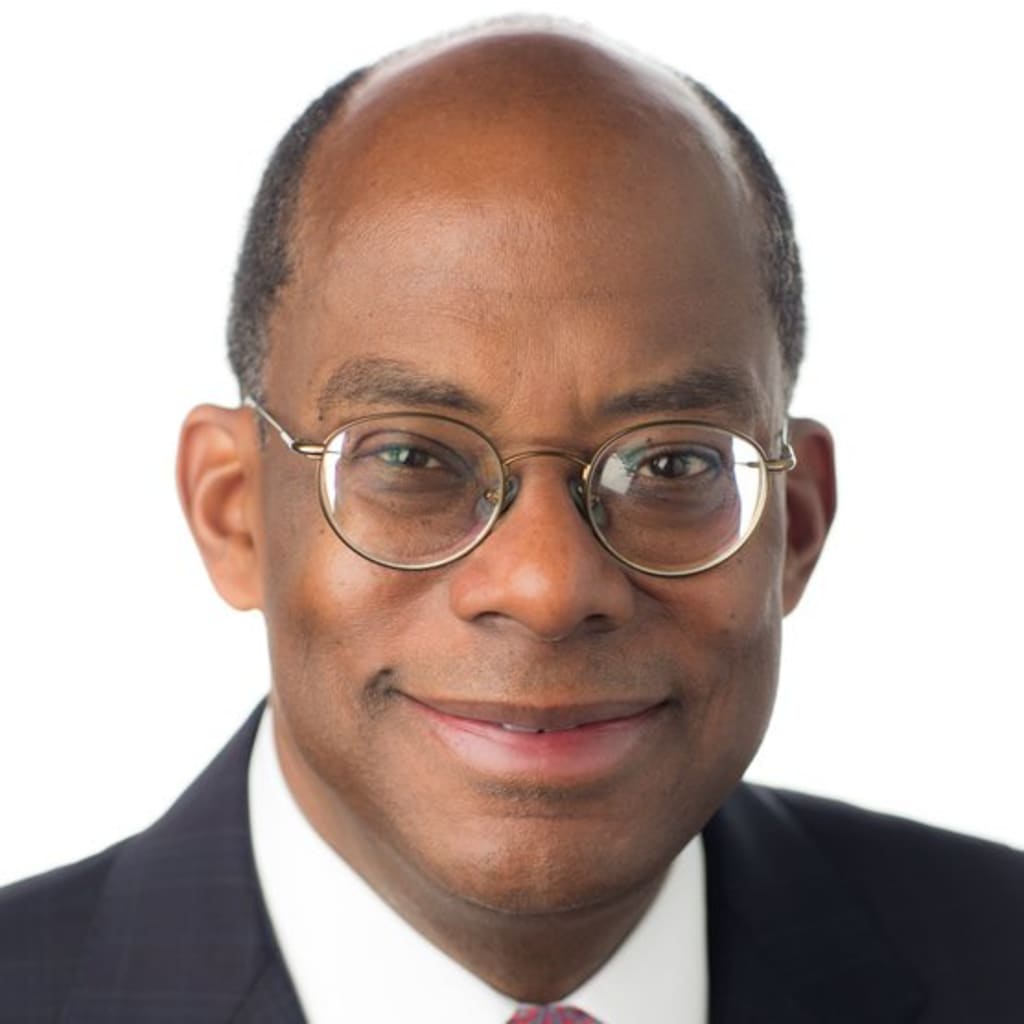 Roger W. Ferguson Jr.CFR ExpertSteven A. Tananbaum Distinguished Fellow for International Economics, Council on Foreign Relations; CFR Member
Presider
 Carla Anne RobbinsCFR ExpertSenior Fellow, Council on Foreign Relations; CFR Member
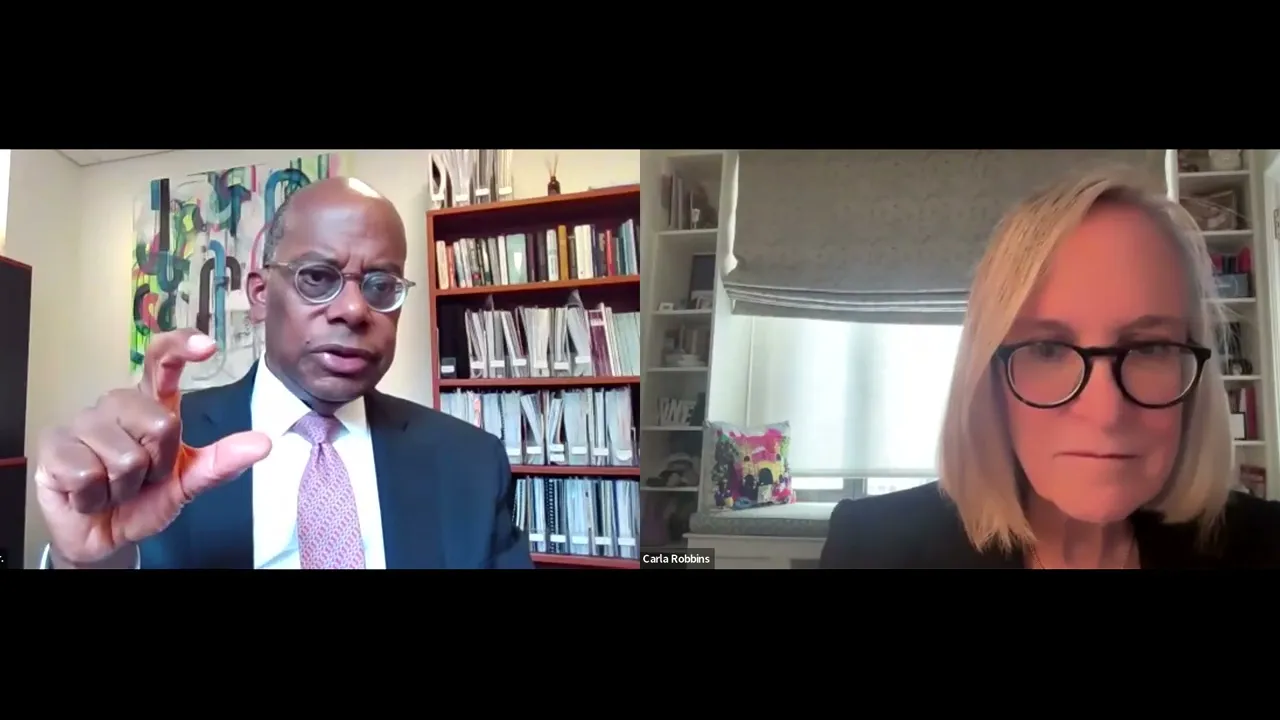
Roger W. Ferguson Jr., CFR’s Steven A. Tananbaum distinguished fellow for international economics, discusses the economic outlook for the United States ahead of midterm election season, particularly in light of continued tensions and volatility in the Middle East. Host Carla Anne Robbins, senior fellow at CFR and former deputy editorial page editor at the New York Times, moderates the conversation.
TRANSCRIPT
ROBBINS: Good afternoon and welcome to the Council on Foreign Relations Local Journalists Webinar. I’m Carla Anne Robbins, a senior fellow here at CFR and host of this series. Our noble leader, Irina Faskianos, is traveling today.
CFR is an independent, nonpartisan national membership organization, a think tank, educator, and publisher, focused on U.S. foreign policy. CFR produces policy relevant ideas and analysis, convenes experts and policymakers, and is the publisher of Foreign Affairs. CFR takes no institutional positions on matters of policy.
This webinar is part of CFR’s Local Journalists Initiative, created to help you draw connections between the local issues you cover and national and international dynamics. Our program puts you in touch with CFR resources and expertise, and provides a forum for sharing best practices. And we’re delighted to have fifty-five participants from twenty-five states and U.S. territories with us today. I want to remind everyone that this webinar is on the record and the video and transcript will be posted on our website at CFR.org/localjournalists.
And we’re pleased to have Roger Ferguson, Jr. with us today. We’ve shared his bio with you, so I’m just going to give you a few highlights. He is the Steven A. Tananbaum distinguished fellow for international economics at CFR, and the immediate past president and chief executive officer of TIAA, the leading provider of retirement services in the academic, research, medical, and cultural fields, and a Fortune 100 financial services organization. And I just thanked him before we started for managing my financial situation as a—as an academic. (Laughs.) Dr. Ferguson is also the former vice chairman of the Board of Governors of the U.S. Federal Reserve System, where he led the Fed’s initial response to the 9/11 terrorist attacks. Welcome, Roger.
So, let’s start with a few of the big picture economic questions. The U.S. is often described as energy independent. So why did the Strait of Hormuz closure still hit the U.S. economy so hard?
FERGUSON: Well, first, before answering questions, let me say how pleased I am to be here. And I’m looking forward to this conversation with you, but also with the journalists.
So to answer your question, we are independent in that we produce more than we consume, which allows us to export. However, oil is one of those things that’s priced at an international level. And while we are energy independent, it turns out that in some places we have to import oil, some places we export oil. So we’re an active trader of oil as well. And, you know, the way economics work is—particularly for this kind of global commodity that is traded—the price is set internationally. And so that’s why the Strait of Hormuz closure has had—one of the reasons it’s had an impact on oil prices here. It has had an impact on other prices as well. And perhaps we can talk about that. But energy independence does not mean that we aren’t influenced by external factors. In fact, oil is a global commodity and, as I said, the prices are set so internationally.
ROBBINS: So was the concept of energy independence sort of always a mirage?
FERGUSON: Three things. There were moments when we were much more dependent on imported oil than we are today, when what we actually produced was less than what we consumed. So in that sense, moving to the point that, you know, overall what we consume is less than what we produce is not a mirage. It’s a real thing. What it does mean is at moments when there are dramatic supply shortages, we’re unlikely to have that impact what happens. And so some of your listeners may remember the so-called oil shock in ’72-’73, when in fact there were long lines and some gas stations ran out of gasoline. That is not an issue now.
So this is purely a question of the fact that prices are set internationally, and that in some places we still do import. So those of your colleagues who are living on the East Coast, particularly in New England, may or may not know that much of the oil that’s refined there is actually imported, as opposed to coming from other parts of the U.S. Some of this also has to do with way pipelines run. And so energy independence is not a mirage, but it is not, you know, a panacea and cure-all meaning that we are never influenced by what happens in other parts of the world that produce or consume oil.
ROBBINS: So when people hear about conflict like this war in Iran, and more generally in the Middle East, they immediately think about oil prices. And, obviously, gas prices. It’s impossible to drive down a highway and not see this enormous placards with gas prices. But what are the less obvious ways that this conflict has worked its way into local economies and household budgets?
FERGUSON: So it’s also had a big impact that’s playing through the agricultural sector in particular, because it turns out that some of the major inputs for fertilizer come through this region. So phosphorus is one of them. And so, you know, farmers are talking about increasing prices for fertilizer, which will ultimately play through to, you know, what we, who live in cities, see in the shelves. The other thing that we’ve discovered, and this is not necessarily true at local communities but will be true overall, is there’s a manufacturer of helium, for example, which turns out to have been very important in cooling datacenters.
And we’re all driven right now by—and we’ll come back to talk about it—sort of, you know, technology issues. Those are not, at this stage, I’d say, playing into consumer experiences. But certainly increases in gasoline prices, increases in the price of liquefied natural gas, which is related to gasoline, and also increases in the price of food stuffs, are all starting to play through into what people are feeling, you know, at their local communities, their local gas stations, their local food stores.
ROBBINS: So how much do things bounce back? There’s a lot of talk about a peace deal, And President Trump keeps saying, oh, the gas prices have gone up, but they’re going to come down again. The economy—inflation may be up, inflation will come down again. If there is a peace deal, will things turn around really quickly? Or is there a longer tail in something like this?
FERGUSON: I think there’s a longer tail in something like this. First, we started at a place where inflation was relatively high. It had come down from extraordinarily high levels, but are still running roughly at 2 ½ to 3 percent, depending on what metric one used. And there’s no reason to think that, you know, after this it’s suddenly going to drop below the numbers we had been experiencing before. Secondly, you know, the process of restarting—reopening is not immediate.
As an example, I mentioned liquefied natural gas. Well, one of the things that has occurred during this war is that one of the major producers of LNG, one of the major facilities, was heavily damaged and may take, I’m told, I’ve read, you know, more than a year to come back online fully. And the other thing that’s happened here is there’s probably been some reshuffling of what we have talked about quite frequently, supply chains, where companies, manufacturers, importers may be thinking, hmm, maybe Middle East supplies, even of oil, are not as certain as I had hoped. And we need to rethink where we get supplies from. And perhaps prices still go up, or certainly don’t come down as quickly.
So I think you have all of those factors. You know, reshuffling of so-called supply chains, you know, the gradual rebuilding and reopening of infrastructure that has been destroyed, the process of reopening the Strait of Hormuz itself was going to be somewhat slow because I believe the Iranians have put in, you know, a number of mines as part of managing that very narrow waterway. And then, you know, the preexisting condition of inflation running a little higher than the Fed’s target. So I think, you know, what that means to me is we’re unlikely to see a dramatic return to where we were before. And, frankly, where we were before was not fully satisfactory.
ROBBINS: So these sort of events hit different sectors of the economy differently. For example, would small businesses experience a hit like this differently, and feel a turnaround differently?
FERGUSON: They might. It depends. So, you know, the other thing we ever talked about—we talked about gasoline prices, which consumers feel, but also diesel prices are very important. And, you know, many small businesses rely on stocking and restocking the shelves with goods that come in by truck. And so, you know, right now we’re seeing so-called fuel surcharges that are affecting, you know, different sectors. And so I would say every business probably has some impact from this, because there’s, you know, no business that is completely self-sufficient, and standalone, and doesn’t, you know, bring in goods from someplace else by truck or by train, or by both.
So, you know, I would say there’s no sector that’s completely immune. But I would also say, yes, things are certainly uneven. There are more energy-intensive sectors than others. Obviously, agriculture depends more directly in the cost of fertilizer, though we all pay for that eventually. And so both things can be true. No one is completely immune, because inflation is a general rise in prices. And we are having that. And at the same time, some businesses are less directly impacted than others. And so, you know, that’s the nature of a very large and complex economy.
ROBBINS: So gas prices go up and gas prices come down. Do other prices ever come down, like food?
FERGUSON: That’s a very good question. So we have had periods recently where, sort of, goods prices in general have been coming down. When I say recently, I’m talking about the last ten to fifteen years, not the last two to three. So, yes, there are some sectors and some items where prices do come down. They come down, in part, because of productivity improvement, which means that, you know, the cost of producing something goes down and businesses can sell them more cheaply and still hold on to their so-called profit margin. Which is important. There are bad reasons for prices to come down. And that’s called a recession, when all of a sudden there’s not quite enough demand and in order to stimulate individuals to buy goods companies are forced to reduce their prices.
And so there are both good and bad reasons for prices to come down. I would say overall, the price level in the U.S. tends to run towards prices in general going up, but very, very slowly. You know, we’ve had a long period when prices went up under 2 percent, and most people didn’t talk about inflation. So it’s only in the last—post the pandemic when, again, the concept of inflation started to become something that was—that was very, very important. So, yes, there are moments when prices come down, particularly we’ve had it for goods. Sometimes that’s a positive thing. Sometimes it’s a negative. But it turns out that in general in the U.S. there’s a slight bias towards a pretty low level inflation, which actually is not a bad outcome for most people overall, as long as the level of inflation is relatively low.
ROBBINS: So, how—if I’m a reporter and I’m based in Michigan, or I’m a reporter and I’m based in Maine, or I’m a reporter and I’m based in Florida, are the people I cover experiencing the economy significantly differently?
FERGUSON: They’re experiencing the economy somewhat differently. And the reason is we have some pockets of our country that are heavily driven by agriculture and tourism, for example. So Florida, depending on where you are, for some local communities it’s a very agricultural economy. For others, it’s a very tourist-oriented economy. Obviously, in and around Miami it’s a little bit of everything. And so local reporters have to ferret out what is it that’s driving their local economy. And do they go talk to a farmer? Do they go talk to someone who’s running a hotel, or a restaurant? Or is it really an economy that’s driven by sort of a really big industry?
You know, Michigan, you’ve raised that. You know, obviously for periods of time they were heavily driven by the automotive sector. Still the case. The automotive sector is not as dominant as it used to be, and now there are questions of sort of technology, for example. And certainly, if one is up in Maine probably looking at timber and other agriculture. But if you’re in Portland, you may be thinking about the health sector, for example. And so, you know, different regions experience the economy differently. But at the same time, there are these national trends that we’ve been talking about. And those trends tend to be things like inflation in general tend not to vary much from region to region.
ROBBINS: And we tend to hear data about the economy as national data. How much—I mean, where do I look for regional data, or for state data, or local data on the economy?
FERGUSON: Well, you introduced me as having been the vice chairman of the Fed. One of the great things about the Federal Reserve system is that there are twelve regional banks in major cities—Boston, New York, Philadelphia, Atlanta, Chicago, St. Louis, Kansas City—I won’t name all twelve. But that’s a great place to start, because almost every Federal Reserve bank has a regional economist or tracks regional data. I would certainly say at the state level, you know, all states have, you know, focus on development activity, et cetera, in their states, and produce state-level data. And then there are things like the local Chamber of Commerce. It may not produce data, but it’s a gathering place for the individuals who are, you know, driving their local economy.
And then, obviously, you know, so-called man or woman on the street, you know, what is Mr. or Ms. X feeling around gas prices, or, you know, food prices, or going out to a restaurant? So there are many, many ways to get the feel for the local economy. And, frankly, as I travel around, I always like talking to taxi drivers and finding out, you know, how’s business. And also, you know, folks in hotels. So there’s—don’t ignore so-called word of mouth, but also feel free to leverage, you know, what the federal—what the Fed does as well, which is much more driven by, you know, Ph.D.-type economists, as opposed to, you know, the man or woman on the street type of groups.
ROBBINS: So the inflation numbers were up on the last report. Is that just a temporary phenomenon because of gas prices, or? This is, obviously, a highly political issue. The president is complaining a lot—was complaining a lot about the outgoing chair, Jay Powell. War ends, inflation settles down again? What’s your—what’s your feeling? You’ve been at this for a long time. (Laughs.)
FERGUSON: Yeah. No, I’ve been watching inflation and the economy overall for quite a while. Let me go back to where I started when we first talked about this. The underlying inflation, even before the conflict in the Middle East, was already running a little hot. And what I mean by that is the Fed has established a target of keeping inflation at roughly 2 percent. And they had—inflation had been running above 2 percent for roughly five years. And so one of the reasons that the president was sort of unhappy was that it was very difficult, in fact probably irresponsible, for the Fed to be cutting interest rates when inflation was clearly running a little high. You know, I think post this crisis that challenge is still there.
And, frankly, you know, we haven’t talked much about it, but markets seem to be expecting maybe inflation to remain a little bit elevated as well. So I think the answer on inflation is it’s not the searing experience of a 9 percent inflation that we had immediately after the pandemic, which was due to short term supply-demand imbalances and reopening economy, et cetera. But inflation is now on people’s minds. And, very importantly, you know, the Fed thinks about something called core inflation, which is inflation minus food and gasoline. Well, most individuals don’t think about core inflation. They think about the headline inflation that you just talked about. And that’s still there.
The other thing, if, if you’ll let me continue—
ROBBINS: Please.
FERGUSON: Inflation is the change in the price level. So 2 percent, 3 percent. The other thing that people think about, and it goes to a point that you raised earlier, is the price level itself. And so they remember when they went to the grocery store last year, that same bag of groceries cost less than it does today. And people really get focused on the outcome of inflation, which is the price levels, and why they’re different. And it’s really hard, even if we slowed down inflation that means the growth of prices will be slower. But it doesn’t mean, to your point, that the price level suddenly starts to come back down.
And that’s second thing that’s always on people’s minds. Even if inflation is lower, it doesn’t mean that, to your point earlier, price levels are lower. And that’s why this conversation around, you know, so-called affordability is, in part, about inflation. But it’s also, in part, about just a basket of goods or services two or three years ago really was less expensive than it is today. And folks who go into the store every week just have that on their mind. So that’s the other way to think about it. It’s not just inflation, but it’s the price level. And price levels, to your point, rarely generally come down in good times.
ROBBINS: So which indicators—I mean, we’ve going to have a new chair of the Fed, aa war that may or may not end, politics which shouldn’t enter into the decisions of the Fed but we have a president who’s certainly demanding it. Which indicators, from an economic point of view, are the most significant ones for interest rate decisions?
FERGUSON: There’s several of them, obviously, because our economy is very large and complicated. But to try to simplify it, the ones that probably matter most right now, we’ve talked about. One is the measure of inflation, both overall inflation, called headline, but also this thing called core inflation. The Fed is focused on both of those. And, you know, most consumers don’t follow those two numbers, but they’re readily available. So that’s one. If I were a reporter, I just want to think nationally about how the national numbers look, and do they play into my, you know, local reporting. The other thing that had been very important, and is probably less important now, is the unemployment rate. The Fed had been worried about a very weak labor market and a rising unemployment rate. Now what we’ve seen is unemployment rate has been roughly 4.2-4.3 percent at a national level. And so that’s something else that, you know, that the Fed certainly looks at.
Interestingly enough during all of this, you know, our growth rates have actually been holding up pretty well. You know, so often that’s the third thing one looks at. And one still looks at that, obviously, but that has not been sort of the key problem. The key problem has been job market that looked a little soft, unemployment rate that looked like it was rising, but fortunately that’s stabilized now, and then inflation that we’ve talked about many times that was above the 2 percent target spiked up, and still has not come back down to the 2 percent target.
ROBBINS: I’m going to—I have twelve other questions to ask you, but I’m going to throw it open to our group.
Hannah, can you remind people how to ask questions?
Q: Absolutely.
(Gives queuing instructions.)
ROBBINS: You guys are awfully quiet today. I’m going to start calling on people. So in my professorial role. While I wait for—ah.
FERGUSON: There’s something that looks like it popped up.
ROBBINS: It was Hannah.
FERGUSON: OK. Oh, yes.
ROBBINS: She’s pump priming, is what she’s doing here. So why is the stock market surging?
FERGUSON: I’m glad you asked that question.
ROBBINS: Are these people crazy? (Laughter.)
FERGUSON: It’s surging for good reasons, and maybe more problematic reasons. The primary reason that it is surging is that we are also experiencing something we haven’t talked about, which is a dramatic investment boon, particularly in, you know, things associated with AI, that everyone’s talking about. And there are a handful of companies that are very large, heavily represented on the stock market and the indices, that benefiting from this AI boom. And there’s a tendency in Wall Street to not want to miss out on the next hot thing. And right now, you know, AI-related companies are the hot thing. And money keeps flowing in, because investors think, you know, that stock is where I want to be. And, you know, we know the names. You know, we now have companies that are worth, you know, 4 (trillion dollars) to $5 trillion. You know, these numbers were unimaginable, you know, call it a decade ago, maybe even five years ago.
The second reason that the stock market is booming, I’ve talked about already. Which is even though there are a lot of pressures and unevenness in the U.S. economy, it’s still actually growing roughly at its potential. And seems, in spite of the challenges that we talked about—you know, shooting wars, inflation that’s rising—you know, to maintain a good forward momentum. And that generally is good for, you know, most businesses. So those are some of the good reasons that that we should all celebrate, that we can sort of talk about some of the underlying challenges in those activities. There was a moment when the market was rising in part because of an expectation that the Fed would continue to cut rates, which means the cost of money would go down. I think that’s no longer the case. And, you know, that was, I think, a bad reason for the market to rise, because I didn’t think the Fed was likely to be cutting rates as much as the market had expected.
But overall, I would say, you know, the stock market is rising, the indices that people look at, because it’s associated with a particular sector that happens to be doing very, very well right now. And overall, the economy is doing well. Which means businesses in general are doing well, not even—not just those associated with AI.
ROBBINS: There’s a follow-up question from Rick Hirsch. Rick Hirsch, do you want to ask the question or should I read it?
Q: You can go ahead and read it.
ROBBINS: Rick Hirsch, at Collier Prize for State Government Accountability: But, given runaway inflation, the fear of missing out on AI, would you consider this a bubble?
FERGUSON: So let me be—let me, Rick, if I can rephrase something here. I wouldn’t say we have runaway inflation. We have inflation that’s roughly, you know, 3 percent. We’ve had inflation that was 9 percent. That felt more like “runaway.” So I want to nuance the question a little bit. You go on something that people are worried about, which is, you know, is this a bubble? And I’ve lived through lots of bubbles. So let me tell you why this doesn’t feel to me exactly like a bubble, though I think prices are very high. The reason I think this is not exactly like a bubble is there’s, I think, quite a bit of productivity improvement embedded in this AI. Right now I think some companies are taking advantage of it more than others, but over time I think all of us, while there may be some challenges, can benefit from, you know, the advantages of AI and a more productive economy.
And that’s different from other moments when there are bubbles because, you know, people thought that we could sell unlimited amounts of dog food on the internet. Or, you know, we’ve had bubbles around things like, you know, the pet rock. I’m old enough to remember, you know, a bubble around certain kinds of toys. So this one feels to me somewhat different. And I’m always cautious when people say, well, this time is different, so I would say this time is being driven by a very significant investment boom that’s driving, you know, a technological change that is unlike anything that we’ve seen in the last many, many decades. So that’s why I’m reluctant to say it’s a bubble. But I would say those prices have moved very quickly. And, you know, the productivity improvement that we expect has got to show up in order to validate some of these prices. So in that sense, I wouldn’t use the word bubble, but I would say there’s a real bet on the future. I think it’s likely to come true, but it hasn’t occurred just yet.
ROBBINS: Robert Chaney, you have a question. And can you identify yourself?
Q: Hi, there. Yes. This is Rob Chaney. I’m with the Mountain Journal at Montana Free Press, out in the Rocky Mountains.
Out in the Rockies here, and a lot of flyover country, we’re feeling like we’re in the front end of a gold rush of all of these potential AI datacenters, and potential power plant expansions, and potential power line grid connections that are, one, over the horizon, and, two, multiple competing ones, of which some are going to lose. And but we’ve got all of these salesmen running around loose with these gigantic dollar signs saying everybody’s going to be rich and happy in a minute. As a local reporter, I’ve got two real questions with that. One is, how do you cover that kind of a speculative, over-the-horizon economy? And the second thing is, assuming that any of it actually comes to bear, all of these things are construction projects. And the other big economic issue out here is that we can’t find copper wire. We can’t find two-by-fours. We can’t find carpenters and plumbers and the people to build stuff. And the over-the-horizon economy is all based on we’re going to have tons of infrastructure built.
FERGUSON: Look, so, first, I commend you with really deep insight into one of the challenges around these topics. We talked about how, in many ways, the economy is quite different across regions. And you’re absolutely right. You know, the mountain west is one of those places where many people think, you know, there are vast amounts of land waiting to be developed. You know better than I that, you know, there’s some truth to that and some that’s not so true. But, to your point, in order for all that to happen, guess what? We’ve got to bring in raw materials and workers. And so you know what that means in the local community? Prices start to go up. Housing starts to become more difficult to find. Rental housing suddenly pops up, and all sorts of outsiders are renting it.
For those who own certain kinds of land, this is probably a good thing. You know, if you own a medium-sized ranch in some parts of the world, you may find the next best use is to sell it for a datacenter. So I would absolutely report on, your phrase, the gold rush-type activity now, everyone running towards certain kinds of land. I would also really report on what we economists would call supply and demand imbalance around labor and getting the right kinds of workers. You know, you need skilled workers to deal with this electricity. And where’s all that going to come from? And what does it mean for the locals, you know, people who’ve lived there forever? Are they going to be priced out?
You know, those are the kinds of things I would actually talk about in terms of the way people are experiencing this today. And, you know, it’s all for something that’s over the horizon, but I think the actual news, in some ways, and you’ve talked about it, is maybe less about over-the-horizon and more about what does it actually feel today to live in, you know, a boom time? Now, I didn’t use the word “bubble,” because it may pay off, but your point is certainly well taken. You know, when you are in a local economy that is benefiting from, you know, all this demand, it feels like is a boom because you’ve got—individuals, businesses have to pay up to bring in the necessary supply of, as you say, copper, other raw materials, and, most importantly, these skilled workers. I think that’s a really important local story.
It creates—to be fair, I don’t know what it’s like in your community, but I’ve observed is a certain backlash that’s starting to emerge. You know, not everyone wants one of these datacenters in their community, because it eats up land, and they imagine it’s going to, and it does, increase the price of utilities, all sorts of things happen. And the process of building these things, you know, is also inconvenient for people. So I think it’s—I think it’s a fascinating story about, you know, what it feels like to have an investment boom going on in your backyard. And sometimes it’s about what’s over the horizon, which it could be great for the overall economy, but I think what’s interesting from a news standpoint is how does it feel day to day for the person who’s lived there for, you know, generations. And, frankly, how does it feel for the new people coming in? You know, and what are they experiencing? So I think it’s just a fascinating time to be writing the local look on this big national, and indeed international, thing that’s happening.
ROBBINS: Thanks. Kathleen Quinn.
Q: Hi. I’m Kathleen Quinn. I’m a civics and democracy reporter for the Modesto Bee in the Central Valley of California.
As you can imagine, that’s a major powerhouse when we’re talking about farmers and the global economy. And what I wanted to ask you about is how this is going to impact that international food trade. Because in our area we are very large exporters of things like almonds, and walnuts, and you name it, pistachios, and all that sort of thing. And the farmers here have been impacted previously with tariffs and things like that, and have been essentially given a bailout—(laughs)—related to that. But thinking long term here, and the uncertainty around not just the tariffs but also the global economy and the way that the United States is interacting with it now, what are your thoughts on how that economy is going to operate in the future? I hope that’s not too much. (Laughs.)
FERGUSON: No, no. It’s not too much. And your question has within it the multitiered answers that do exist. First and foremost, we have to understand your part of the country, but the U.S. in general, is capable of being, in almost every commodity, the global food basket. You know, only roughly 2 percent of our population is in agriculture, but we are highly productive in that space. (Laughs.) And therefore, quite capable of exporting all the kinds of things you’re talking about, plus many other items. So what does that mean? It means three things. One is, anything that disrupts trade is probably negative for your community. So tariffs are probably, you know, negative for your community, when others put on countervailing tariffs. And there have often been tariffs against agricultural products, in particular, in the United States, because we’re so good at producing them that it’s difficult to compete for local farmers outside of the U.S. with our own farmers here in the U.S.
You know, frankly, you know, people in your part of the world obviously are influenced by some of the things I’ve talked about in terms of specific price increases that affect fertilizers. I’m sure that goes on. There’s also the broader geopolitical question of countries deciding to retaliate against the U.S., for whatever reason. And, again, since one of our major exports is agriculture, that’s a place that people have to look to think about, you know, retaliating against the U.S. And so I think what’s interesting about agriculture, it is one of those areas, even though it’s quite local in terms of production, it’s quite global in terms of distribution. We haven’t talked much about, you know, the value of the dollar, for example, but, you know, as the dollar goes up in value, it means that it’s more expensive for others to buy our goods and services, and consequently demand can go down. And so all these things, you know, sort of play in.
And then finally, farmers are also quite aware of not just the inputs of diesel and fertilizer, but also interest rates. You know, much of an agricultural economy depends on borrowing money at some parts of the year to pay it back later. And interest rates going up and down is something else that folks in agriculturally oriented communities talk about. So, you know, if I were doing the kind of work you’re doing, you talk about democracy, et cetera, but, you know, the local impact of these global forces, you know, is really—is really quite important. So, again, I think this is—it’s a good time for all reporters to take a little bit of an economic angle, because I think economics is—obviously, I’m a professional economist. I’ve always thought this. But I think economics really is driving much of what people are feeling these days. And it’s, I think, because at a national level it’s been so heavily talked about in terms of inflation and prices, et cetera, and the president wanting one thing or the other, that I think, you know, the local community is probably more attuned to economic issues than they’ve ever been.
ROBBINS: Can I follow up with that? This constant return—certainly, we hear this from the BRICS, this notion of eventually de-dollarizing the global economy. And rallying people’s fury at the United States right now, at the Trump administration starting wars, our immigration policies. Do you—there’s no sign that people are pulling their money out of the U.S. stock market, and no sign that people are dumping dollars in their investments for their central banks. Is this just we’re lucky right now? Or did you—are people—is there any sense at all that the fury that people are feeling geopolitically toward the United States is translating in some way and going to punish our economy?
FURGUSON: I think the general—my view—and I will come back and explain why this is my view. My view is that the strength of the dollar is a real reflection, ultimately, of the central role of the U.S. economy in so much of the global economy. Points that you just made, the world’s largest and deepest financial market. We are right now, you know, the epicenter, along with China, of the AI investment boom, and, over time, productivity boom one hopes will follow. And, you know, we are still, you know, the largest single economy in the world.
Most importantly, we are also, unlike China, one of the most open economies in the world, the way we run things. So my view is the noise and talk against the dollar is likely to not have a lasting impact on the position of the dollar as a major currency. It will be somewhat weakened by some of the things you talked about. And it would certainly be somewhat weakened, maybe more so, if people didn’t think that we had an independent central bank. But overall, I don’t think, you know, we’re going to wake up a generation from now and discover that the dollar has become irrelevant on the international markets.
Now, I say that that’s my view because there are a couple of economists who are writing articles and books that are suggesting that it’s a deeper threat than I have just laid out. There’s a Harvard professor named Ken Rogoff who has written a recent book about that. I would encourage people to take a look at it, to see what the arguments are. You know, and he’s a very smart person, done a lot of historical analysis. He points out quite rightly that reserve currencies do lose their position, dominant currencies do lose their position. But that tends to occur when the underlying economies also lose their position as dominant economies.
And I guess my argument is right now, for all of our weaknesses, I think we still are, you know, the dominant economy, and the one that, in spite of our issues and challenges that you talked about, versus almost everybody else, I think most people over time would feel much more comfortable holding dollars than any other currency. And consequently I think some of the challenge right now is unlikely to play out in the way that we will sort of notice going forward. But, again, I emphasize really smart people whom I respect and studied with have taken a slightly different view on this one. And so it’s worth having journalists who want to think about it to take a look at some of the work that this Ken Rogoff up at Harvard has done, was so you know the nature of the argument.
ROBBINS: Diego Lopez. Hey, Diego. Diego, are you still with us? Yeah. So probably going to have to write something.
Can we talk—while I wait for other people to ask questions—talk about immigration policy and its impact on the economy? And which is not only just people’s fury, but also the reality of it. How much is that going to have a longer range, or even near term—certainly on farming, but more generally, not just—meat packing plants, factories, all of these things?
FERGUSON: Yeah. So I think it has—has had, and I think will continue to have, a noticeably impact, for the reasons that you point out. So let me start with a big macro statement, which is that without immigration U.S. population growth would not have occurred for quite a period of time. I think people often—and, by the way, having an increased population, meaning more people in the workforce, is one of the components of having a growing and productive economy. We’ve been talking about the technology. That’s the other major one. But, you know, in economic terms it’s called the number of workers and number of work hours. And so at a macro level, slowing population growth from immigration, I think, is not a positive thing.
Second point I often make when you talk about this is we talk about the theory or the construct of job loss to immigrants, but you made a really good point. The kind of work that most immigrants do in this country is not the kind of work that, generally speaking, most people want to encourage their kids or grandkids to do. You know, they’re very respectable jobs, very important jobs, working in very important sectors. You know, but most people start to imagine those levels—those are sort of entry-level jobs. They’re really hard work. And we all aspire for our kids and grandkids to have sort of easier work lives and get paid more per hour.
Third point I’d make, and this issue of slowing immigration has played into one of the dilemmas that the Fed has faced trying to figure out, well, how many jobs does the economy have to create in order to be healthy? And because we’ve lost immigration, it turns out that we don’t have to create that many jobs in order to have a healthy economy. I’ve actually seen some economists say that, you know, net job creation can be relatively low—I’ve seen as low as zero; I’m not sure that’s true—in order to have a balanced labor market. And so one of the things the Fed has been struggling with, that we talked about is, well, what does, you know, a balanced labor market look like? And they’ve finally come to the conclusion that it’s less about job growth, because we have so few immigrants, and it’s more about the, you know, sort of overall unemployment level, which I’ve described as being roughly full employment.
So, it’s a longish answer to say that I think restricting immigration here over time reduces the growth of the population relatively quickly. I’m not sure that I agree with the theory that immigrants are taking jobs that so-called native-born Americans are eager to take. And I do think it’s a disruption to the labor market that forced the Fed to recalibrate and rethink and, you know, change some of those policy views as they try to come to grips with this new environment in which both illegal and legal immigrants are—appear to be less welcome right now.
ROBBINS: For those of you who cover agriculture out there, I’m just wondering whether or not the farmers that you cover are finding enough people to pick their crops. I mean, that was one of the great sort of nightmare scenarios that are out there, you add that to what’s going on there. I mean—
FERGUSON: And you put your finger on other things, though. There are agriculture-related jobs that you talked about, slaughterhouses, et cetera, where a lot of immigrants are there. I think they’re an awful lot of immigrants in other parts of the service economy as well. So it’s not just those in agricultural sectors, but those in cities with lots of restaurants or hotels, or in, you know, communities that have meatpacking plants, et cetera. There are many places where this dramatic shift in the way we think about immigration may be playing into what the local business leaders are talking about and thinking about.
ROBBINS: How much separation between the Canadian economy and the U.S. economy is actually taking place, or between the Mexican economy and the U.S. economy is actually taking place? Or is that—is that more rhetorical than real?
FERGUSON: I think it’s, at this stage, more rhetorical than real. You have to understand that we’ve had decades of integrating these three economies. And the borders are not that meaningful when it comes to thinking about things like manufacturing automobiles. I don’t have it at hand now, but the statistics of the number of times a car goes back and forth across the border in Canada or, depending on where it is, in Mexico, is pretty high. It is very difficult in a short period of time to unwind all those relationships, to build plants on one side of the—or, factories on one side of the border, as opposed to others. It’d be interesting again, since these are local reporters, to hear some reportage or some views from those kinds of communities. But at a macro level, most people are thinking we haven’t really succeeded at, you know, pulling this intertwined U.S., Canadian, Mexican economy, you know, at the border, apart.
And even the president has been thinking about, you know, different ways to restructure the so-called USMCA—U.S.-Mexico-Canadian free trade area—to make it more fair to the U.S., in his eyes, but not to completely eliminate it because it would be, I think, over a long period of time, economically unwise, and almost impossible in a short period of time to pull the three economies apart.
ROBBINS: Although this is the—it’s hard to see, with the with the rhetoric, and to the point of longer-term planning, that from a national security point of view there are certainly—countries are de-risking from the United States. One wonders whether or not businesses are going to start de-risking from the United States.
FERGUSON: Yeah. Over time, I think that’s right. I mean, I think it’s at the margin. So you just mentioned, you know, Canada. It’s not my area of specialty, but I happen to take a note of the amount of effort that the Canadian prime minister spent in building good relationships with China, for example, or attempting to build stronger economic ties to Europe, and away from the U.S. So there’s clearly a move towards de-risking. And, you know, that kind of de-risking has to play into business decisions, for sure. But I think to some degree the bigger challenge that we’ve lived with was around the pandemic, when we realized that businesses had optimized supply chains for efficiency, and hadn’t thought about, you know, some of the things that could undercut resilience.
And so, you know, I think you put all that together, and certainly many businesses have to be thinking about the so-called process of reshoring, onshoring, et cetera. So the reason I said is this is not purely a political kind of conversation that’s to go on. It’s also very much, you know, what we’ve learned about resilience in this era of globalization, de-globalization, re-globalization. So there you know there are many forces that are driving businesses to think about where they do production. And the geopolitical ones that you just talked about are one of them, but I would argue in many other ways, you know, the focus and the learning from the pandemic may be, you know, even more impactful.
ROBBINS: So what do we as reporters get wrong when we write economic stories? And what should we do a better job of explaining to our readers?
FERGUSON: One of the things I’ve talked about I think people often get wrong, which is the difference between inflation, which is a headline, and it’s the change in the price level versus the price level itself, right? And, you know, those two concepts are related. And so the period of inflation that we’ve had means that the price level for some things has gone up by 25 percent. But I think keeping those two things separate, because what we’re going to discover is inflation will, hopefully, gradually come down, but the price level is not going to change. So it’s a point that you raised earlier. So that’s one.
I think, secondly, the distinction between the overall price level, which you call inflation, and then the prices of particular things. And when we can—we tend—and your comment brought this home. We tend to not report enough on prices of certain kinds of things that tend to come down, while other things go up. And so we had a long, long period when the prices of goods were coming down for everybody, because of free trade, because of increased productivity. You know, the fact that you can go into your local big-box store, call it a Costco or whatever it is, and buy an eight-four inch TV screen this year for, you know, what you would have paid for a screen half that size last year, tends to be ignored. So that’s the second thing that I would encourage people to think about, because you made a really good point. What places do prices come down to compensate for prices where they’re going up? So that’s something else I would say, you know, one you think about, for sure.
And then, you know, the third that you really put your finger on is how these big, macro geopolitical things, such as immigration, actually affect, you know, the local economy. And making sure we are, you know, taking these big, national swings down to what does it actually mean for the people who read, you know, your local paper every day. So those are some of the—some of the things are that I always—that I always worry about making sure that we try to get them right. And particularly important for local papers, because, you know, for many, many people that’s the most trusted source of news. And, you know, it’s got to be—the economics is, in some sense, the hardest thing to report on, because it seems alien to many people. Most folks don’t study it. We, economists, use, you know, shorthand language, et cetera. So I think that’s one that just really worry about.
ROBBINS: We’re going into a midterm election and a very political season. Ultimately presidents get blamed for the economy, or they take credit for the economy. Joe Biden and the price of eggs. If I’m writing a story about local races, congressional races in the next months, how much—what can I point to that actually are genuine affordability issues that are—that are the result of public policy, that I can say, my congressperson voted X way and it’s going to have an impact on the economy. It might eventually create jobs. It actually could have an impact on inflation. It could have an impact on the price of X, Y, or Z? Versus the economy is really actually out of the hands of politicians. I mean, I think that’s a real public service to, you know, call you-know-what on politicians when they take credit or they blame the other person on the economy. So what’s really—what public policies really affect the economy? Small question. (Laughs.)
FERGUSON: No, look—small question, but absolutely the right question. So you put your finger on some of it. I think this issue of tariffs actually affects the economy. We talked about the fact that certain commodities are harder to get. So fertilizer actually affects the economy. It’s actually the result of, you know, a shooting war, in a way that maybe surprised people.
Truthfully, you know, we’ve talked about it, while we are, quote, “energy independent,” the price of gasoline, as we are experiencing it, is a result of, you know, policy decisions. I’m not sure it’s a local congressperson’s decision. But, frankly, if my local congressman was railing against, let’s say, immigration, I want to know for my local economy to what degree are we reliant on folks born in other countries to help drive our economy? Has politician X, Y, or Z really thought about what it means to have no immigrants in our community in terms of the quality of life, et cetera, and in terms of that set of questions?
So those are some of the places I would look. But I would start with what’s driving our local economy. Manufacturing? Is it service? Is it a local hospital? Is it agriculture, et cetera? And I’d ask the fundamental question, where do the workers come from for that business, since that’s so much the hot button issue right now. And, you know, are we finding an imbalance between what we need and what we have. And to what degree is that, you know, something that, you know, this set of politicians—(inaudible)—or is it a bigger thing?
So we just had someone from the mountain west talk about, you know, the imbalances that come from the AI bubble. I wouldn’t necessarily—well, boom. I wouldn’t blame that on, you know, a politician. But when it comes to labor conditions that have to do with, you know, the size of the labor force and immigration, I really want to know where did my congressman or congresswoman or representative or senator stand on that question?
And similarly, because we just went through it, this whole question of tariffs. What were you saying about it? What were you doing to protect us from the impact of tariffs? So those are some of the kinds of things I’d be asking about. But I would start with what’s the engine of the local economy, and then you’ll see if you can draw a straight line from the local economy to, you know, a vote that someone took.
ROBBINS: That’s really helpful. Thank you so much for really a good conversation. And thank you all for joining us. We’ll send out a link to the webinar recording and transcript soon. As always, we encourage you to visit CFR.org, ForeignAffairs.com, and ThinkGlobalHealth.org for the latest developments and analysis on international trends and how they are affecting the United States. Please share your suggestions for future webinars by sending an email to [email protected]. And thank you, Roger, for joining us. And thank everybody else for joining us today. And we will be back soon. Thanks so much.
FERGUSON: Thank you.
ROBBINS: Thanks.